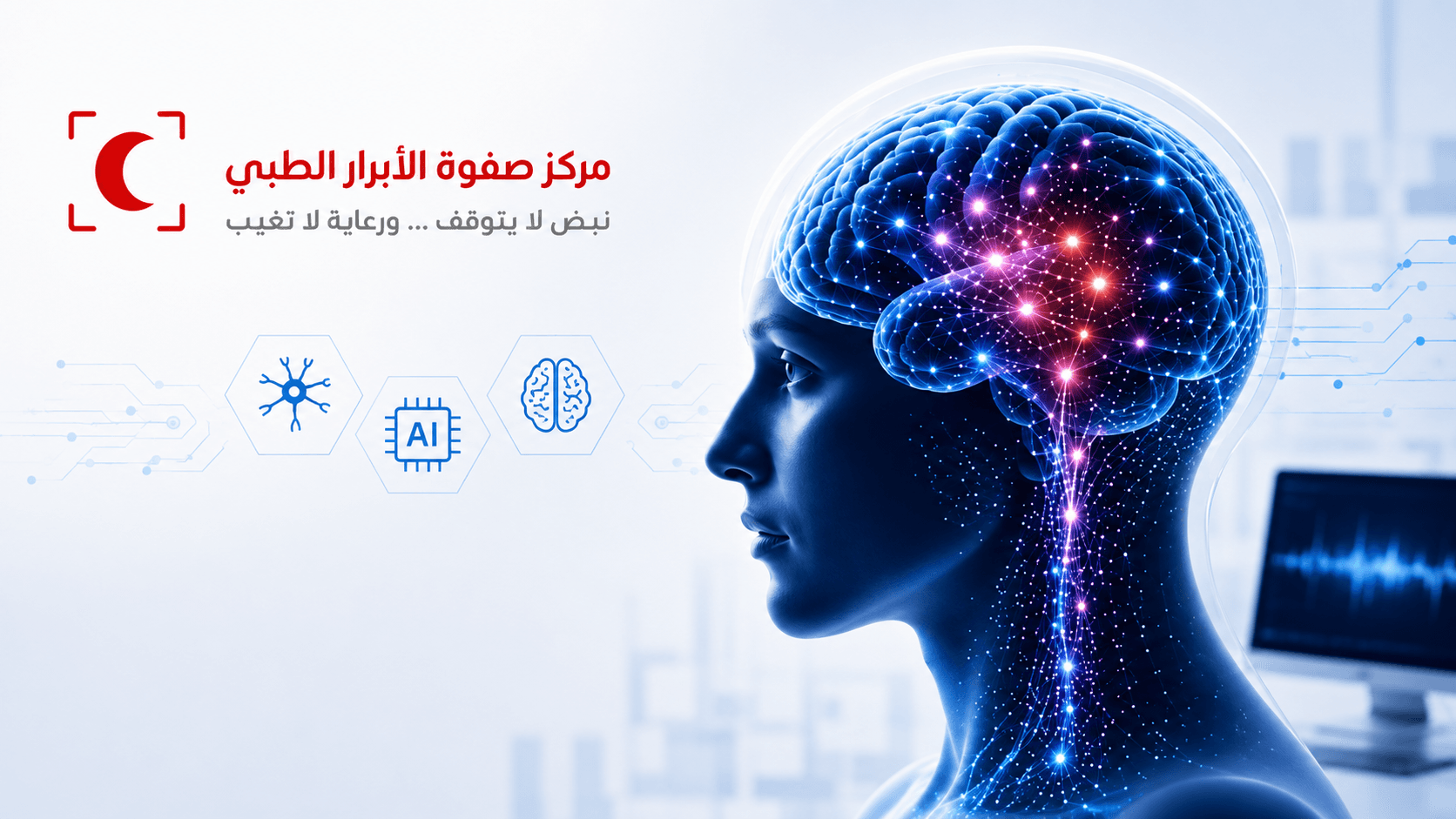
Brain–Computer Interfaces and Artificial Intelligence…
A Promising Step Toward Restoring the Ability to Speak
Category: Latest Medical Articles
Published: August 2, 2026
Reading Time: 4 minutes
⸻
Study Summary
In a promising scientific breakthrough, researchers have developed a Brain–Computer Interface (BCI) that enabled a patient who had lost the ability to speak to communicate again using signals generated by the brain.
The technology captures neural activity and, with the help of artificial intelligence, translates these signals into words that can be used for communication in a faster and more natural way.
This achievement represents an important milestone in neurology and biomedical engineering and highlights the growing potential of AI to improve the quality of life for patients who have lost the ability to communicate.
⸻
Key Findings
* The system successfully translated neural signals into understandable words.
* The patient was able to use the technology from home rather than only in a laboratory setting.
* Artificial intelligence significantly improved the speed and accuracy of converting brain signals into speech.
* The findings represent an encouraging step toward developing assistive communication technologies for people who cannot speak.
⸻
What Do These Findings Mean?
This study suggests that Brain–Computer Interface technologies may one day provide new opportunities for patients who have lost the ability to speak due to:
* Stroke
* Brain or spinal cord injuries
* Certain neurodegenerative diseases
Although the results are highly encouraging, the technology is still in the research stage and requires further clinical studies before becoming widely available in routine medical practice.
⸻
Commentary from the Medical Team at Safwat Al-Abrar Medical Center
Artificial intelligence continues to transform many areas of healthcare, particularly neurology and rehabilitation medicine.
At Safwat Al-Abrar Medical Center, we are committed to following the latest scientific developments and presenting reliable medical information in a clear and accessible way. At the same time, we emphasize that emerging medical technologies require continuous scientific evaluation before becoming part of routine clinical care.
⸻
What Makes This Study Important?
* Demonstrates the growing role of AI in interpreting neural activity.
* Shows the potential for using Brain–Computer Interfaces outside research laboratories.
* Offers hope for improving communication among patients with severe speech impairment.
* Provides a foundation for future advances in neurological rehabilitation.
⸻
What Can We Learn from This Study?
The research highlights the importance of continued investment in medical innovation and artificial intelligence. It also reflects how emerging technologies may contribute to improving diagnosis, treatment, rehabilitation, and ultimately patient quality of life.
⸻
Conclusion
This breakthrough represents a significant step forward in neurological medicine and demonstrates the remarkable potential of integrating artificial intelligence with medical science. While the technology remains under investigation, it offers hope for developing more effective communication solutions for patients who have lost the ability to speak.
⸻
Scientific Source
Article Title: Brain-computer device helps man speak
Publisher: NIH Research Matters
Original Article:
Brain-computer device helps man speak – NIH Research Matters
Brain-AI Interfaces… A Promising Step Toward Restoring Speech Category: Latest Medical Articles Publication Date: August 2, 2026
Researchers have developed a Brain–Computer Interface (BCI) powered by artificial intelligence that enabled a patient to communicate again using brain signals. This promising breakthrough may open new possibilities for helping patients with severe speech impairments in the future